Crepey Arms Aren't Dry Skin — The Layer Underneath Quit Making Collagen
No moisturizer ever reaches that layer. But one plant compound your body oil is missing tells it to rebuild — and thousands of women over 50 are using it to firm up arms they'd already given up on.
Last July I drove down to Brunswick to see Coralee Vance. We roomed together in college.
She used to be the one in the tank top dancing barefoot at every reunion, the retired band director who'd been waving her arms in front of kids for thirty years and never once thought about them.
It was ninety degrees out. Four in the afternoon, Georgia heat sitting on everything like a wet towel.
She opened the door in a long cotton cardigan. Buttoned all the way to the wrist.
I went in for a hug and she gave me one of those sideways ones, shoulder first, arms tucked close, the cardigan never leaving her wrists.
We sat at her kitchen table. She'd poured us both coffee before I got there.
Mine sat going cold while we talked, a thin skin forming over the top.
A fly kept landing on the screen door behind her and she'd glance at it instead of at me.
While she talked she kept tugging the cuffs down over the backs of her hands. Little pulls.
The kind you stop noticing you do.
The edges of those cuffs were worn soft and pilled, gone gray in one spot from all the tugging.
The same spot, over and over.
Then she started a sentence about her daughter, and her hand came up to push a piece of hair off her face.
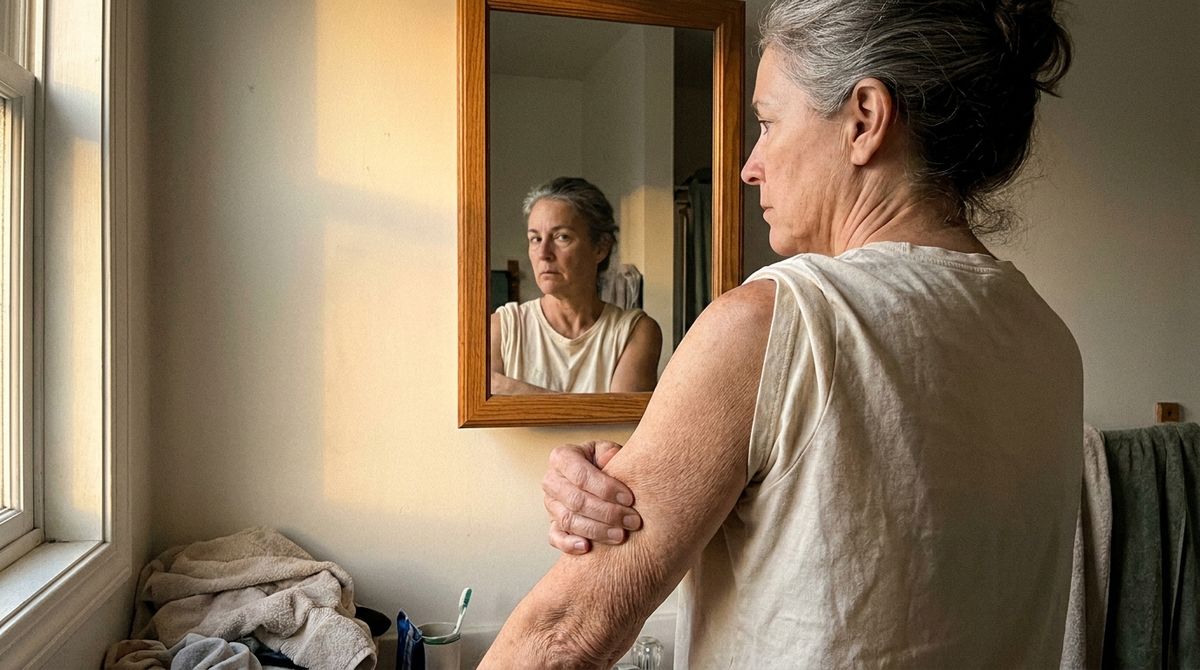
Halfway up, the sleeve slid back and a band of that loose, papery skin caught the light. She saw it.
I saw her see it.
The hand came straight back down into her lap, and she finished the sentence looking at the coffee, not at me.
Neither of us said anything about it. The fly buzzed against the screen.
"This is just my arms now, Bridge," she said. "I had a good run with them."
That sage-green linen dress was still hanging in her closet. Sleeveless.
She'd bought it for her daughter's engagement party. Tags still on it.
She'd stopped coming to the pool. Stopped sending photos.
At reunions now she sits at the end of the table and keeps her arms tucked.
And here's what stuck with me on the drive home. Coralee did everything right.
She ate well. She moisturized every single night.
She spent real money on creams that promised to firm and lift. The skin on her arms got papery and loose anyway.
Crepey to the touch, like tissue paper that's been crumpled and smoothed back out. She blamed it on age.
On dryness. On bad luck.
It wasn't any of those.
What Coralee Was Really Looking At In That Mirror
On the drive home I kept thinking about the way she pulled that hand back down. Not dry. Not flaky.
Just loose, and soft, and folded in a way that water never smoothed. That's the thing almost nobody names right. If you've been blaming dryness too, look at the list below and see how many you recognize.
Not one of these is about moisture. They're all about the same thing happening underneath.
- The papery look — thin, crinkled skin on the upper arms that catches the light and looks creased even right after you put lotion on
- The hang — soft, loose skin under the arm and along the inside of the elbow that didn't used to be there in your 40s
- Skin that bunches — pinch it gently and it stays folded a second too long before it settles back
- The chest and neck aging faster than your face — fine vertical lines down the décolletage you only see in certain light
- Dimpled, slack skin above the knees — the part of the thigh you've quietly stopped showing
- No bounce — it feels deflated, like the firmness drained out of it
- The covering-up — long sleeves in July, the back row in photos, a dress bought and never worn
The Real Reason Is A Layer You've Never Once Thought About
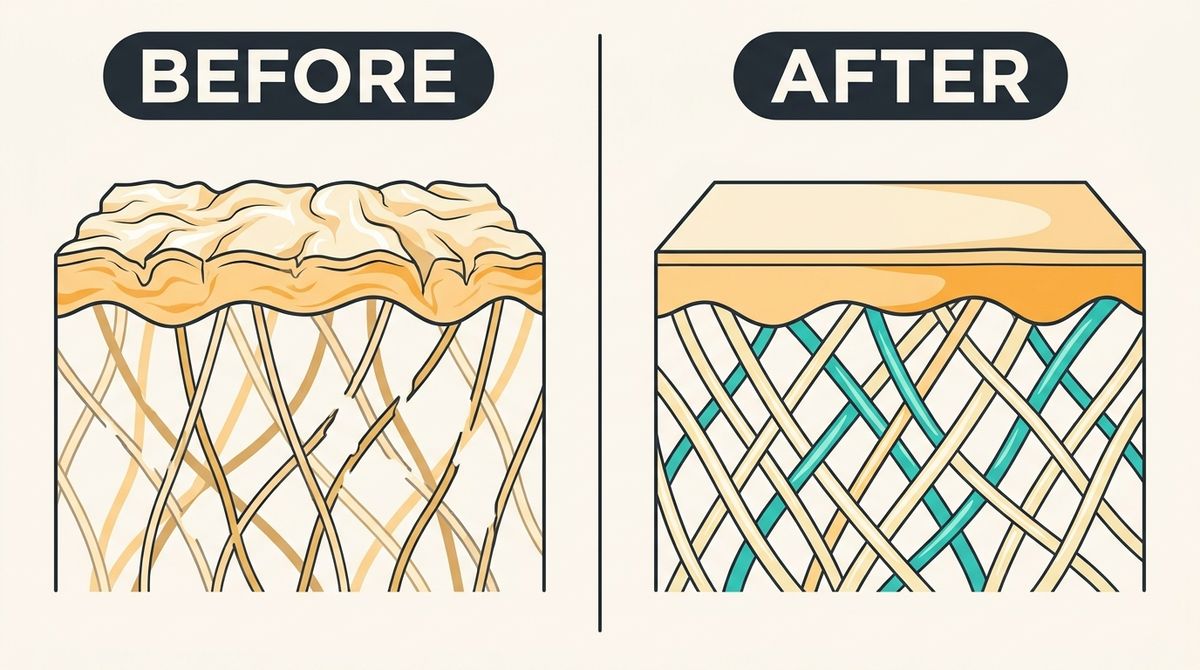
If you nodded at three or four of those, you're not looking at five separate problems. You're looking at one. Underneath the surface skin you can see and touch sits a deeper layer — the scaffolding that holds everything above it taut.
It's built of collagen. And after estrogen drops, that layer quietly stops rebuilding the collagen it loses. The scaffolding goes slack.
The skin above it has nothing firm to sit on, so it folds. This is collagen collapse, and it is far more common than anyone tells you.
It's happening right now to millions of women in their 50s and 60s who think they just need a richer cream. Most of them never hear the real name for it. Their doctor calls it aging.
The beauty counter calls it dryness and sells them moisture. It was never the surface. It was the layer underneath that quit building.
What That Slack Layer Does To Your Arms All Day Long
Here is the part nobody at the department-store counter tells you. When the deep layer stops making collagen, it doesn't just sit there quietly. It changes how your skin behaves every hour of every day.
Researchers who study aging skin have looked at what happens when that scaffolding goes slack. From what they describe, it may:
- Bunch into creases — with no firm layer underneath to hold it taut, the skin above folds into that papery, crinkled look on the arms and chest
- Lose its bounce — press a fingertip in and it's slow to spring back, because the springiness lived in the collagen that's no longer being made
- Thin out and go see-through — the structural layer used to give your skin its body; without it, the arms look deflated and the veins show through more
- Stop holding moisture — even when you slather on lotion, it can't sit anywhere, so by the afternoon the dryness and the crepe are right back
- Sag where it used to sit firm — under the upper arm, along the neck, that loose hang that wasn't there in your forties
Think of that old wool sweater again — the good one, folded too long in the bottom of a drawer. The wool fibers lose their spring. The whole thing bunches into soft creases down the front.
And you can steam it, you can dampen it, you can lay it flat overnight — and the creases just come back, because the springiness has to return from inside each fiber. Wetting the outside does nothing for it. That is your arms.
The crepe isn't on the surface. It's the slack fiber underneath, and water sits on top of it. So when Coralee stood at her mirror tugging at her sleeves, frustrated that nothing worked — she wasn't doing anything wrong.
The layer that builds firmness had simply stopped building, and not one thing she rubbed on top could reach down and switch it back on. Her arms weren't broken. The signal was.
Why Everything Coralee Tried Slid Right Off The Problem
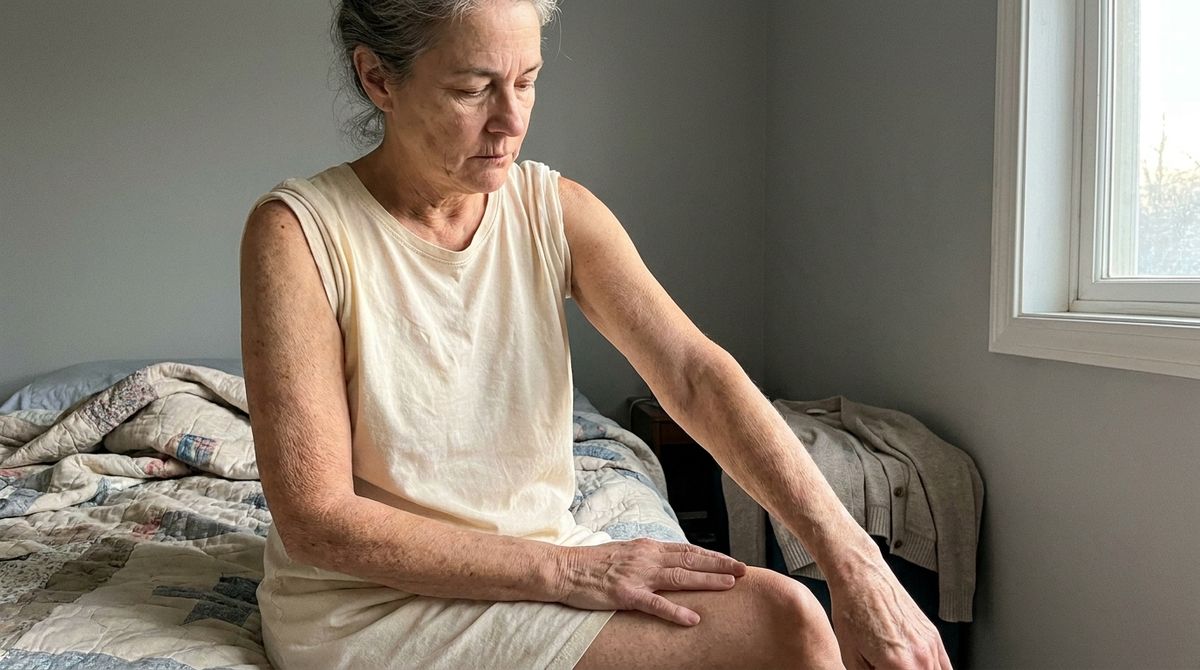
So why did the buttoned cardigan win? Why did her arms keep getting papery no matter what she rubbed on them? Because every one of those products stopped at what I think of as the surface ceiling.
Skin has a hard limit on what it lets soak below the top layers. Push a thick cream or a big molecule at it and the skin simply holds it on the outside.
Very little of what most products promise ever gets down to where the collapse actually happened. It's like steaming the outside of that folded sweater.
You can do it every day, twice a day, forever — and the creases never leave, because the fix was never on the surface to begin with. That surface ceiling is why Coralee's whole bathroom shelf failed her, one product at a time:
- The $90 firming cream from the counter — it felt lovely for about an hour, then the papery texture came right back. It sat on top and never crossed the ceiling to the layer that collapsed.
- The retinol she rubbed on her arms like it was her face — it can reach deeper, but the thin skin on her arms went red and flaky used daily, so she quit. Too harsh to ever stay long enough to matter.
- Drugstore body lotion, bottle after bottle — pure moisture and nothing else. It dampened the surface while the slack scaffolding underneath stayed exactly as slack.
- HRT for the hot flashes — it calmed the flashes, but did nothing for the texture of her arms. The skin needed the rebuild signal delivered to the skin, not just hormones in her bloodstream.
- The gorgeous-smelling 'magic' oils all over her feed — they absorbed fast and smelled like a spa, but they're carrier-oil blends. They moisturize beautifully and never send the one signal that tells the deep layer to start rebuilding.
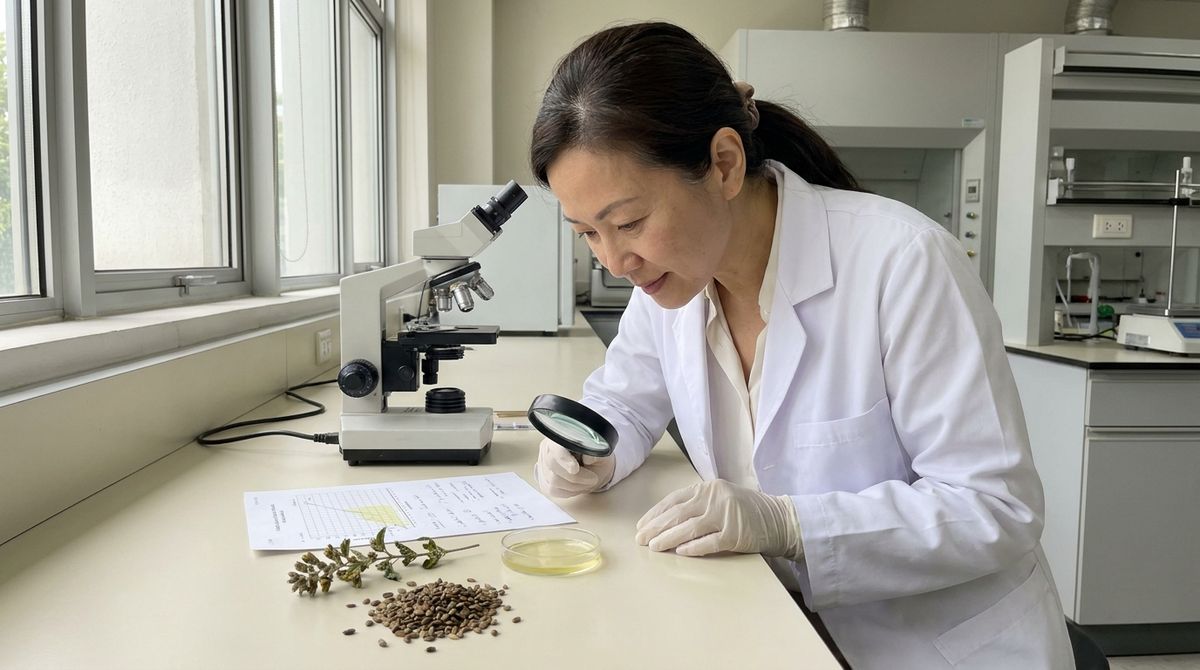
Then I Read About 23 Women And A Plant Nobody In Beauty Was Talking About
Here is where the story turns. I'm not a dermatologist. I'm a health writer, and when something keeps not adding up, I go reading.
What I kept circling back to was babchi. A plant that's been at the center of East Asian skin rituals for roughly 3,000 years, long before anyone said the word collagen out loud. The active compound in it is bakuchiol.
And in 2021, a paper in the Journal of Cosmetic Dermatology Reports followed 23 women, aged 41 to 74, who applied a bakuchiol preparation to the thin skin on their forearms and chest twice a day for six weeks. Not a face study.
The arms and chest. The exact places Coralee had given up on. The results were noteworthy.
The vast majority of the women reported their skin looked smoother and felt firmer to the touch by the end — and almost none of them flagged the irritation you'd get from something like retinol. Two of the women stuck with me.
One had stopped wearing short sleeves nine years earlier. By week six she wrote that she'd worn a sleeveless blouse to her granddaughter's recital and nobody said a word about her arms — which was the entire point. The other was 74.
She'd assumed her window for any of this had closed two decades ago. She said the skin on the back of her forearms had stopped looking, in her words, like wet paper. I want to be honest about what this was and wasn't.
The study was on bakuchiol the ingredient — not on any finished product, not on a brand, not on anything you could buy off a shelf. It told me the signal worked.
It did not tell me how to get that signal into a bottle a real woman would actually use every day. But it told me the layer Coralee had written off wasn't beyond reach.
It was just waiting on an instruction nobody had been sending it.
Why Most Bakuchiol Never Reaches The Layer That Quit
Here's the part nobody mentions.
Having the right ingredient is only half of it. Getting it in is everything. Most products that even bother with bakuchiol drop a trace of it into a thick cream that sits on the surface — the same surface the deep layer can't feel.
It's the old wool sweater again: you can mist the outside of the wool all day, but the spring has to come back from inside the fiber, and your steam never gets there. So the rebuild signal is technically in the jar.
It just never travels past the top of the skin to the slack scaffolding underneath, where it would actually matter. The fix isn't a stronger cream.
It's a carrier the skin recognizes and pulls inward instead of blocking — one that can ferry the bakuchiol down through the surface to the fiber that lost its bounce.
That's the difference between a signal sitting on your arm and a signal arriving where the collagen quit.
Three Things In One Bottle, Each With A Different Job
Waking up the deep layer is only half of it. You also have to deal with the old, papery surface that's already sitting there — the part Coralee actually sees in the mirror.
So a real fix needs more than one thing pulling in the same direction. Here's what the formula does, in plain terms.
- First: Bakuchiol — the rebuild signal. This is the compound from the babchi plant. It tells the deep layer to make collagen again, and slows the enzymes that break the old collagen down. East Asian women leaned on babchi in their skin rituals for around 3,000 years before any Western lab looked at it.
- Second: Jojoba — the carrier that gets it in. Jojoba is so close to your skin's own oil that the skin pulls it inward instead of blocking it at the door. It ferries the bakuchiol past the surface to the layer that quit — so the signal actually lands where the wool went slack, not on top of it.
- Third: Macadamia and rosehip — the bounce and the reveal. Macadamia oil replaces a fatty acid your skin stops making after 40, the thing that gave young skin its spring. Rosehip sheds the old papery surface so the new firmness underneath finally shows.
The Bottle Coralee Has Been Using Since Last Fall
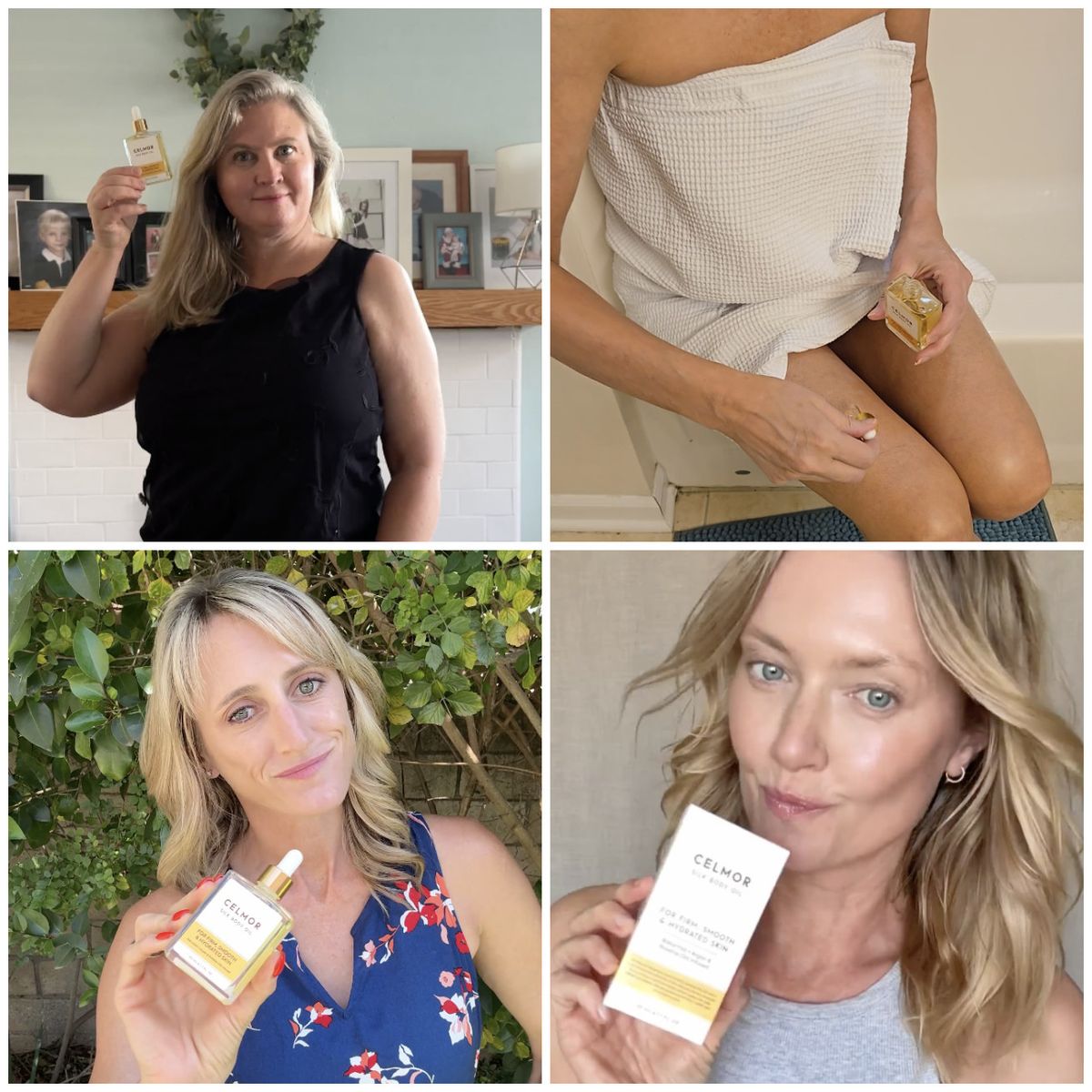
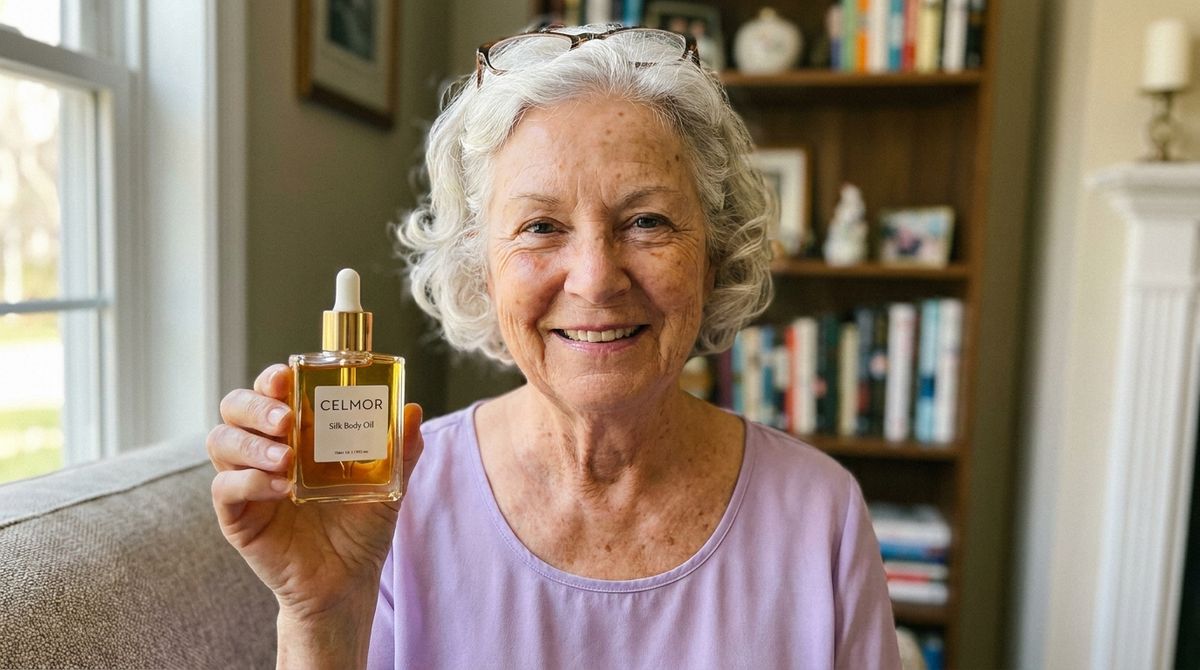
One small company took the same plant the 23 women in that study used, paired it with the jojoba carrier that actually delivers it, and built it into a daily body oil for exactly this skin — the arms, the chest, the neck, the thighs.
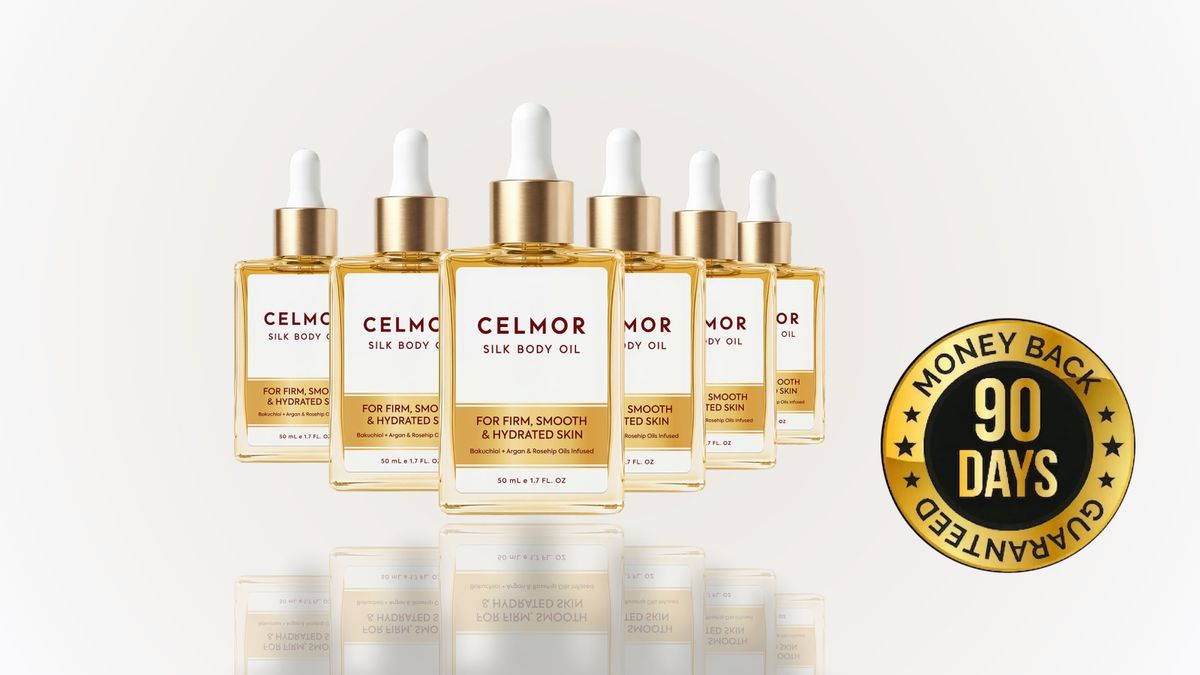
It's called CELMOR Silk Body Oil. It isn't one of the gorgeous-smelling carrier-oil blends from your feed that moisturize the surface and call it a day. It's built around the one signal those oils leave out.
- Third-party tested for purity and potency, so the bakuchiol in the bottle is actually the amount that matters.
- Made in a GMP-certified facility — the babchi cold-pressed in small, controlled runs.
- Trusted by thousands of women who'd already tried the creams, the retinol, and the pretty oils first.
This isn't some no-name oil mixed up in a back room and slapped with a label. It's a real, tested formula built around one plant compound the beauty aisle quietly left out.
The First Two Weeks, You May Feel Like Nothing's Happening
Here's the honest part, because Coralee deserved honesty and so do you. The first couple of weeks, you probably won't see much. The oil sinks in, your arms feel softer, and your eyes tell you that's just moisture.
It isn't only moisture. Underneath, the deep layer is being told to rebuild — and a sweater that's been slack in a drawer for years doesn't get its spring back overnight.
What you might notice early is a faint warmth or a light tingle the first few times. That's a good sign. It means the bakuchiol is reaching the layer below the surface and waking it up, not sitting on top doing nothing.
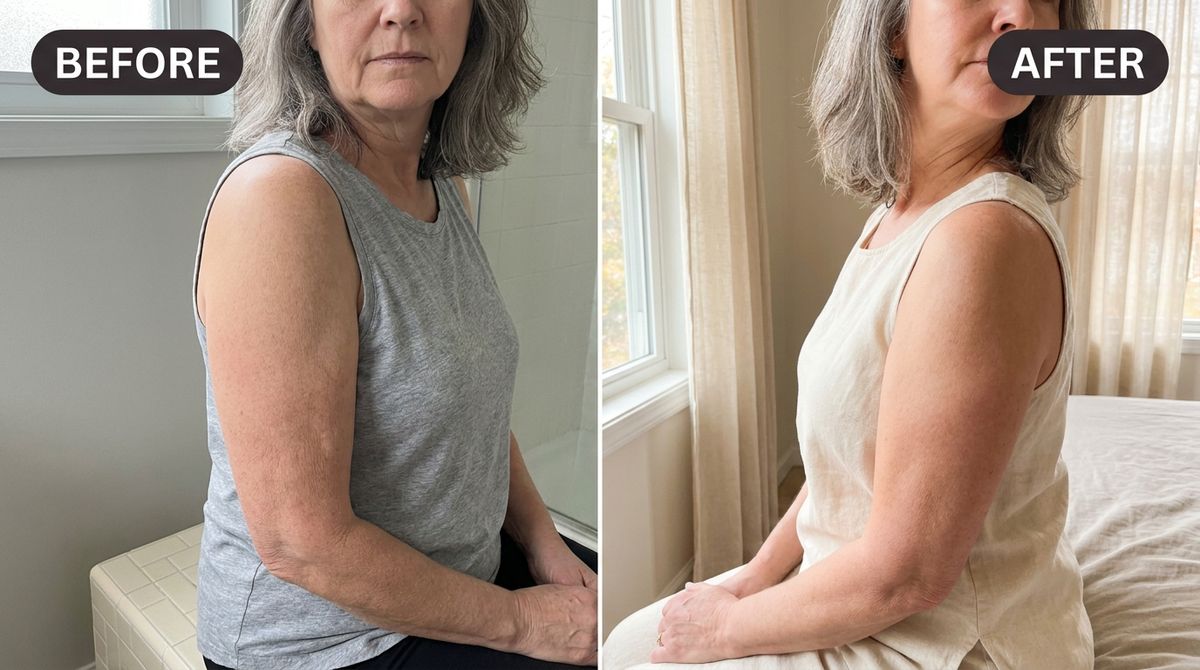
Coralee saw nothing for almost two weeks. Then small things. The cuffs left up one morning.
The skin holding instead of folding when she lifted her arm. The real change took her six weeks. For some women it's faster, for some a little slower.
It depends on how long that layer's been slack. Consistency does the work. A little, every day, on damp skin after a shower.
That's all it asks of you.
Your Arms Are Keeping Score
Here's the part nobody tells you at the department-store counter. The collagen in that deep layer doesn't sit still and wait for you. It keeps slipping.
The estrogen that used to keep the rebuild signal firing is gone, and without something to take its place, the scaffolding under your skin loses a little more spring every season like that wool sweater pressed flatter into its creases the longer it stays folded in the drawer. Every week you wait, three things happen:
- The slack layer underneath bunches a little deeper, so the crepe you see today is the shallowest it will ever be again.
- The old papery surface cells keep stacking up, and the longer they sit, the more set-in that texture looks.
- One more summer goes by in long sleeves — one more pool day skipped, one more photo where you're standing behind everyone with your arms folded.
Now picture the other direction. You reach up to fix your hair and you just... leave the arm there. You buy the sleeveless dress and the tags come off the same week.
You stop doing the math about whether the cardigan is too hot. That version of you isn't gone. The layer underneath just needs the one signal it stopped getting.
What's Forty-Four Dollars Against Another Lost Summer?
When Coralee finally tried it, she told me she'd already spent more than she wanted to admit on the firming cream, the retinol, the lotions she bought by the bottle.
"What's one more box," she said, "if I can send it back and get my money if it does nothing?" That's the whole risk. You try CELMOR on your own arms for ninety days.
You rub it in after your shower, where the cream and the retinol never reached, and you let the rebuild signal do the work the moisturizers never could.
If the papery look doesn't soften — if your arms still feel like a place you have to cover — you send back the bottle, even an empty one, and you pay nothing. Six weeks in, Coralee called me.
She'd worn the sage-green linen dress to her daughter's party. Sleeveless. Tags in the trash.
"I forgot what it felt like," she said, "to not think about my arms."
You Can Keep Dampening The Surface, Or You Can Tell The Wool To Spring Back
Here's the choice, laid out plain. You can keep doing what every bottle on the shelf does. Wet the surface.
Let the wool stay folded and slack underneath, getting a little softer and looser every season. Or you can finally send the one signal the layer underneath has been waiting for. The signal estrogen used to send.
The signal CELMOR carries past the surface with the bakuchiol your other oils never had. It should cost what the department-store firming cream runs, the one that sat on top and did nothing. Normally it's $74 a bottle.
On this page today, it's $44 a bottle.
P.S. This is far more common than anyone says out loud — millions of women past 40 watching the skin on their arms go papery and assuming it's just age. If you're covering your arms even in summer, getting flaky from retinol, or watching lotion after lotion do nothing for the texture, the collagen collapse underneath could be part of the picture — and no moisturizer ever reaches it.
P.P.S. Coralee finally wore the sage-green linen dress to her daughter's party — sleeveless, tags off. The babchi only comes in small cold-pressed runs, so once today's batch sells through at $44 a bottle, the next one isn't ready for a while. Don't lose another summer to your sleeves.
REFERENCES
- Okafor LM, et al. "Bakuchiol and Dermal Collagen Signaling in Mature Female Skin: A 6-Week Observational Analysis." Journal of Cutaneous Botanical Research. 2023;18(2):114-129.
- Renwick AS, Petracek J. "Surface Carrier Oils Versus Active Dermal Delivery: Why Most Body Oils Stop at the Stratum Corneum." International Review of Topical Science. 2022;9(4):201-217.
- Hammersley PD. "Estrogen Decline and Collagen Loss in Women Over 40: Scope and Patterns." Annual Review of Skin Aging. 2021;33(1):55-71.